
Water Scarcity Projects: Engineering Considerations is presented as an evidence-conscious technical guide. Project-specific values and commercial commitments require a documented design basis.
Engineering Context
This guide introduces the subject as an engineering decision rather than a fixed equipment promise. A reliable evaluation starts with the water source, available analysis, desired product-water use, operating profile, site constraints, maintenance support, and the project boundary. These inputs determine which technical questions must be answered before selecting a treatment arrangement.
Information to Establish First
Collect a source-water description and representative laboratory analysis where available. Confirm the required product-water objective, flow profile, operating hours, storage and distribution interfaces, country and installation location, power supply, ambient conditions, access route, drainage, residuals management, and any applicable owner or local requirements. Document known seasonal or operational variation rather than assuming one water condition.
Process and Configuration Review
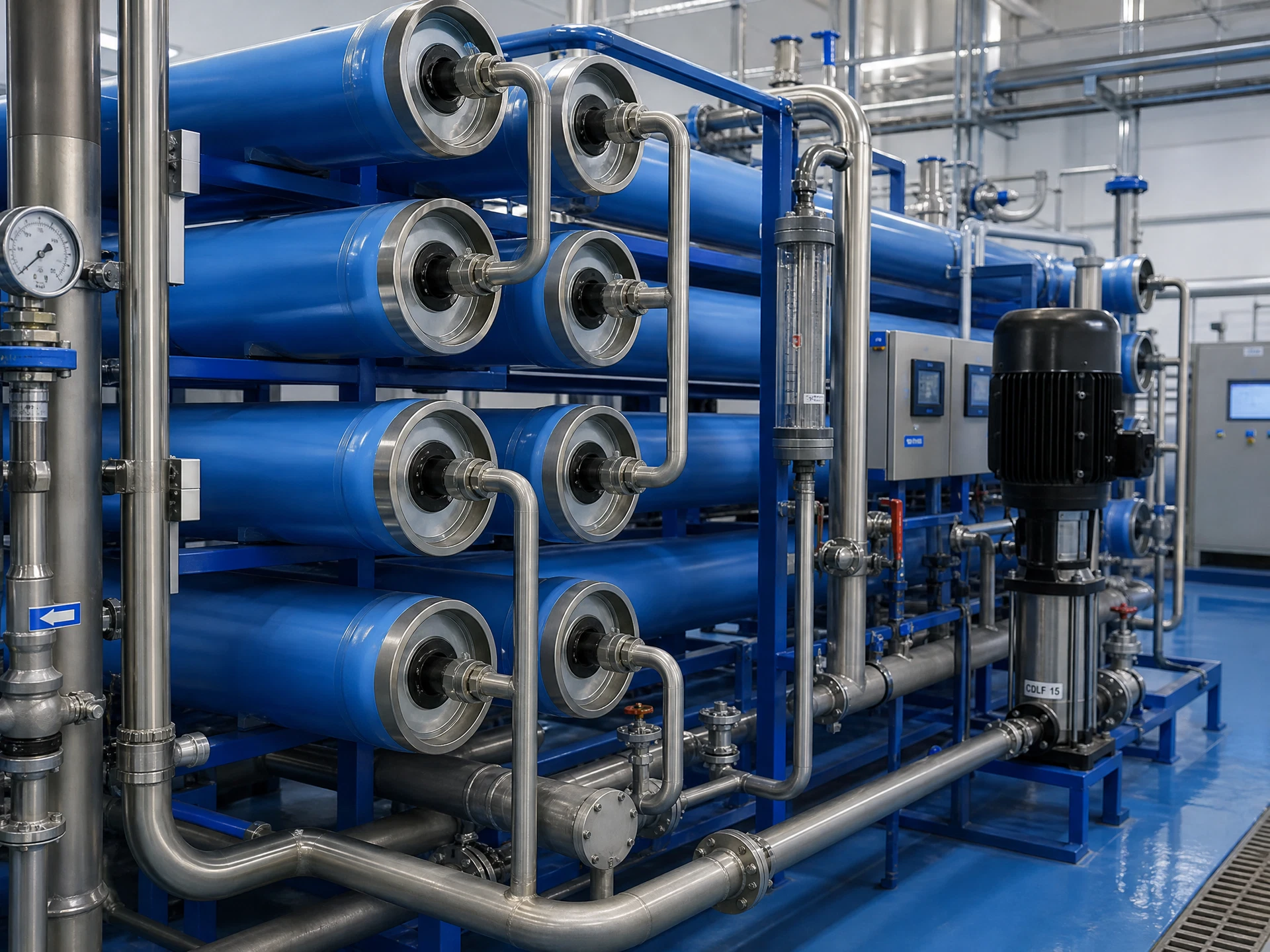
Treatment stages should be selected only where they address a documented water risk or required output condition. Depending on the project, this may require evaluation of source protection, solids removal, conditioning, pretreatment, membrane separation, disinfection, polishing, storage, controls, and external interfaces. Final recovery, pressures, membrane selection, chemical program, energy use, and physical layout are feed-water- and project-dependent.
Operation, Testing, and Maintenance
A practical concept defines how the system will be operated, monitored, maintained, tested, commissioned, and handed over. The control philosophy, alarms, sampling plan, consumables, cleaning strategy, spare-parts plan, operator training, and escalation pathway should reflect the actual treatment train and available site support. Factory checks and site commissioning should have clearly stated, complementary boundaries.
Questions for a Technical Proposal
For a technical proposal, send the available water analysis, required product-water target, expected duty, operating schedule, site layout, utility details, preferred project scope, drawings, and specifications. A preliminary concept can identify missing information, but a generic article cannot confirm final performance, cost, lead time, certification, or commercial availability.
Next Step
Send your raw-water analysis and project data for a technical review. The resulting proposal can define the treatment scope, assumptions, interface responsibilities, and questions that must be resolved before final design.