
Reference capacity page · confirmation required

250m³/day Industrial RO System

This page frames engineering inputs for a capacity reference. It does not confirm a standard system, technical specification, performance value, or commercial availability.

Technical illustration · final configuration is project-specific
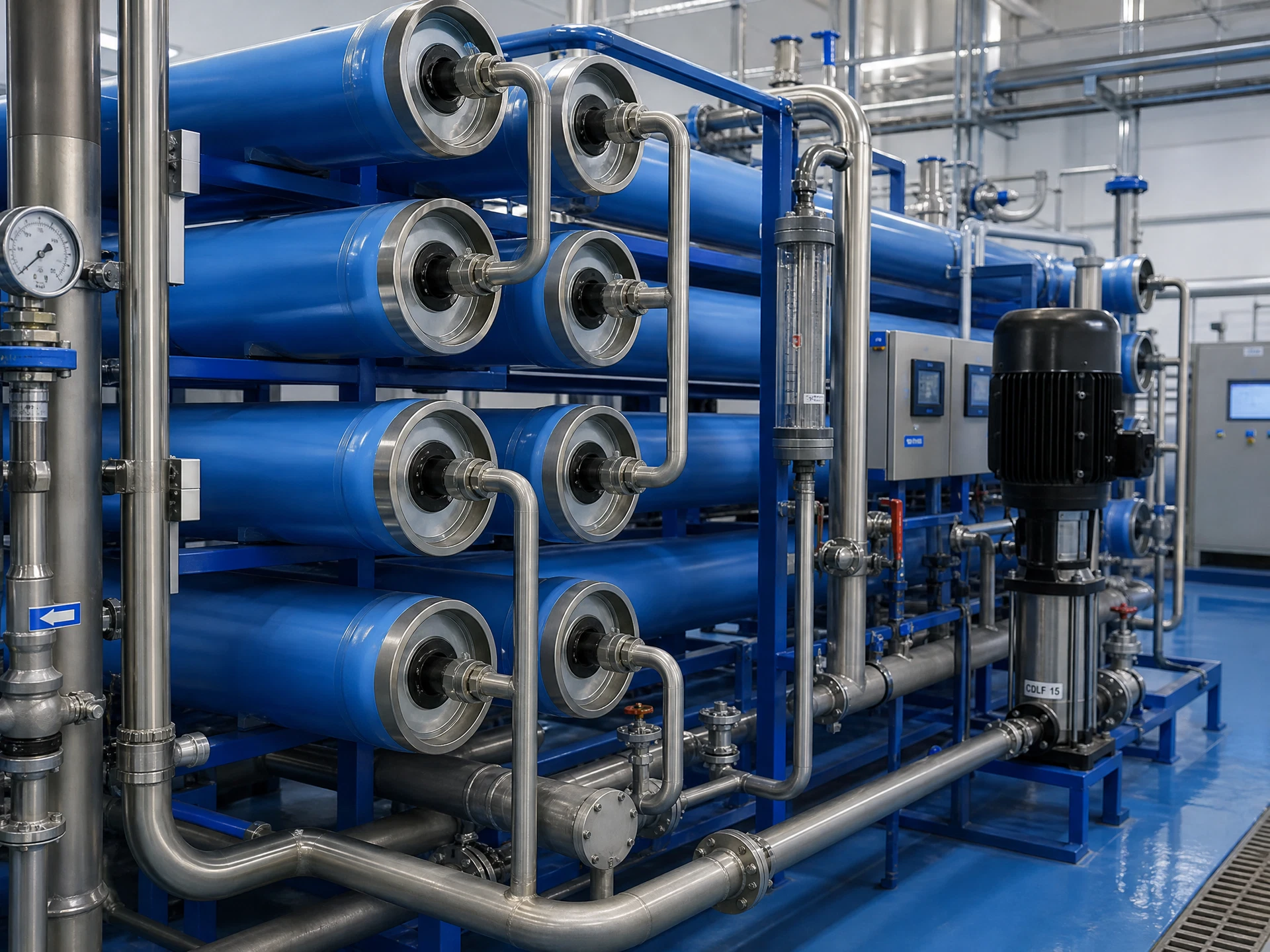
250m³/day Industrial RO System technical illustration
Technical illustration · equipment shown is not a verified project configuration.

Product Overview

250m³/day Industrial RO System is maintained as a capacity-reference route for preliminary engineering discussion. Its role is to help a buyer provide source-water data, required production duty, end-use target, operating schedule, installation constraints, and project interfaces. Final treatment scope must be confirmed using raw-water analysis and the approved design basis.

Engineering Inputs and Design Status

Water source
Provide source description, representative analysis, and known seasonal or operational variability.
Required product water
Define the intended use, quality objective, flow profile, operating hours, and storage arrangement.
Pretreatment
Select only after reviewing solids, scaling, oxidant, metals, organics, biological, or other source-water risks.
RO configuration
Confirm membrane and pump selection, recovery, pressure, and post-treatment from the approved design basis.
Container and site interfaces
Review access, maintenance, drainage, ventilation, power, civil support, logistics, and external piping.
Testing and handover
Agree factory checks, site commissioning, training, documents, and acceptance conditions for the individual project.

System Process Flow

Source-water analysis → Pretreatment selection → RO or treatment-stage design → Post-treatment review → Product-water and site interfaces → Commissioning plan

Main Components

1Source-water and pretreatment review
2Conditioning and filtration stages as required
3Membrane or polishing stage selected from design data
4Pumping, dosing, and cleaning scope defined for the project
5Controls and instrumentation matched to operating support
6External storage, drainage, and site interfaces

Advantages

Named capacity is a reference route, not a confirmed standard product
Final configuration follows water analysis and end-use objective
Container arrangement is reviewed against access and logistics
Controls and monitoring are selected for the operating context
Project interfaces are clarified before procurement
Technical proposal records assumptions and exclusions

Applications

Engineering feasibility discussion
Project-specific process-water review
Remote or constrained-site deployment planning
Container and utility interface coordination
Treatment-train comparison
Water-analysis-led technical proposal

FAQ

What is a containerized RO water treatment plant?
It is an RO treatment package arranged within, or around, a transportable container format. Final process scope, physical layout, and equipment selection depend on raw-water analysis, product-water objective, logistics, site interfaces, and the approved design basis.
How is a capacity reference page used?
A capacity title can support an early technical discussion, but it does not confirm a standard system, recovery, power demand, membrane selection, physical arrangement, price, or availability. Those points require project data and final design.
What information is needed before designing an RO system?
Provide the water source and available analysis, product-water objective, required duty and operating hours, application, installation location, power supply, site constraints, drawings, and any RFQ specification.
Can a project involve seawater treatment?
Seawater treatment may be considered after evaluating intake conditions, representative analysis, temperature and variability, pretreatment, post-treatment, concentrate management, utilities, and applicable project requirements.
How is installation scope defined?
The proposal should define package boundaries, civil works, external piping, electrical connections, drainage, storage, communications, lifting, commissioning, training, and owner responsibilities. Schedule is project-specific.
How is membrane maintenance planned?
Maintenance planning follows the actual feed water, pretreatment, operating record, cleaning triggers, membrane documentation, and site support. A generic replacement interval should not be used as a project commitment.

Request an Engineering RFQ

Share water analysis and project inputs for a scope-based technical proposal.

Your project information is treated as confidential. Open the full engineering RFQ form to attach water analysis and drawings.

Get Your Water Treatment Solution

Tell us about your project. Our engineering team will design a customized water treatment solution for your specific requirements.